

You Don’t Need a Diagnosis to Belong Here

About Mindful Point
Mindful Point Behavioral Health Counseling was built around focused, effective care for adults navigating trauma, anxiety, depression, and life adjustment. Every approach used here is evidence-based and chosen with a specific purpose — to help you move forward, not just manage.
As a solo practice, there’s no rotating staff or handoffs. You work with one therapist who knows your history and shows up prepared every time. That consistency matters — especially when the work requires trust.
Part of good care is also knowing when a different level of support is needed. If you’re dealing with something like treatment-resistant depression or moral injury that requires more intensive intervention, that won’t get overlooked here. In those cases, therapy can serve as an important source of continuity and support while you’re engaged in more targeted, specialized treatment elsewhere — and you won’t be left to navigate that process alone.
You Don’t Need a Diagnosis to Belong Here
Many people who seek therapy are carrying something very real that doesn’t fit neatly into a clinical label. If any of the following resonate, this practice may be a good fit:
• Trauma that was never processed, or that you’ve been told “wasn’t bad enough” to count
• Complex PTSD (CPTSD) — the result of repeated, prolonged trauma rather than a single event, often showing up as emotional dysregulation, shame, or difficulty trusting others
• Moral injury — the lasting weight of having witnessed, participated in, or failed to prevent something that violated your core values
• High-functioning anxiety — you appear to have it together on the outside, but internally you’re exhausted by worry, overthinking, and the pressure of keeping up
• Burnout — chronic depletion that goes beyond stress, often accompanied by detachment, cynicism, and a loss of sense of purpose
• Identity disruption — the disorientation that comes when a major life change — military separation, career loss, divorce, parenthood, retirement — leaves you unsure of who you are outside of the role you held
•. Vicarious or secondary traumatic stress — the cumulative toll of being repeatedly exposed to others’ trauma, common in first responders, healthcare workers, and caregivers
•. Caregiver strain — the emotional and physical exhaustion of supporting someone with a serious illness, disability, or mental health condition
•. Chronic stress that hasn’t crossed into a diagnosable anxiety disorder but is quietly eroding your quality of life
•. Depression that hasn’t responded to previous treatment, including treatment-resistant depression requiring a higher level of care or specialized intervention
You don’t have to arrive with the right words for what you’re experiencing. That’s something we work out together.
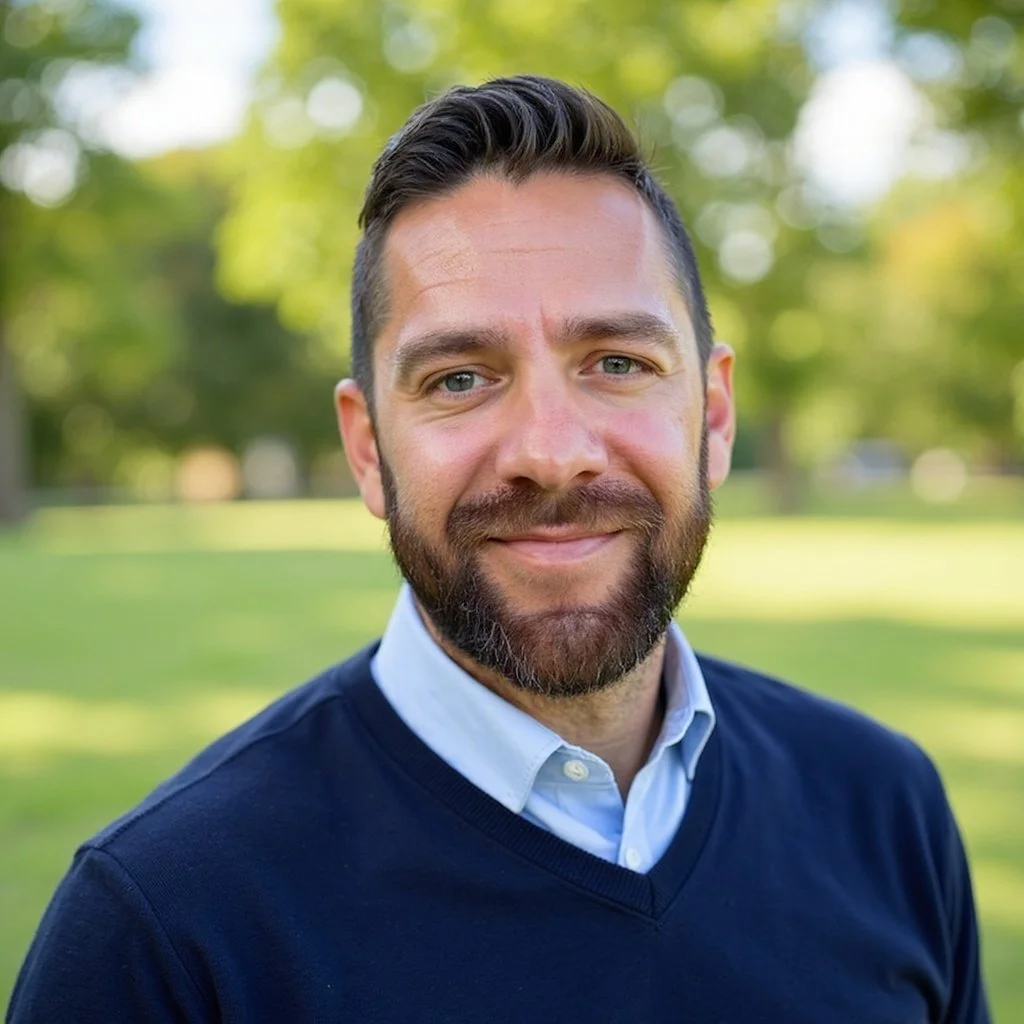
Meet Joshua Roybal, LCSW
I was born and raised in Roswell, New Mexico — the son of two educators. My mother dedicated her career to the New Mexico public education system, and my father spent more than 25 years teaching at the New Mexico Military Institute. Growing up, I watched both of them show up every day in service of their community, and that example never left me.
After serving in the Army, I found myself doing what so many New Mexicans do — coming back home. And I'm glad I did. My wife, our three kids, and I are rooted here, and I consider myself a stakeholder in this state in every sense of the word. I still remember visiting my grandparents' home in the Villanueva valley, playing along the Pecos River — that sense of place, of
belonging, of knowing where you come from, has shaped who I am.
I hope my kids feel that same pull one day. I hope New Mexico is always home to them, the way it has always been home to me. That love for this place — and the people in it — is part of what brought me to this work and keeps me in it.
In His Own Words
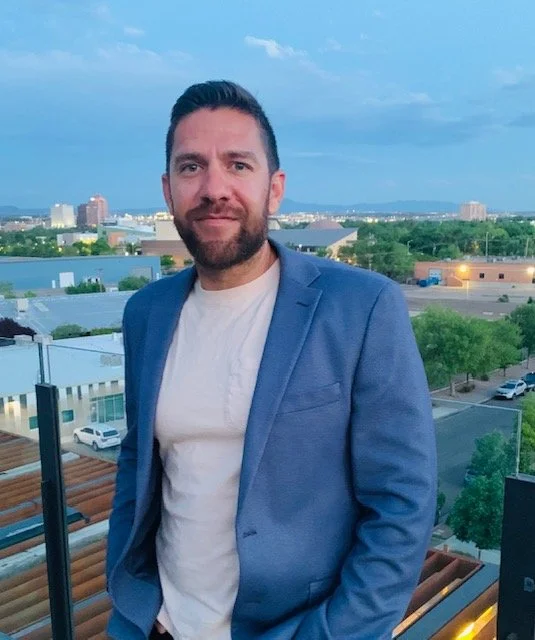
Trauma doesn’t always look the way people expect. It’s not always a single event, and it doesn’t always come with a clear label. Sometimes it’s years of something that was never supposed to happen, or one moment that quietly changed everything. Sometimes it’s anxiety that’s been running the show so long you’ve forgotten what life looked like without it. Sometimes it’s depression that settled in quietly, or a life change that knocked you sideways and left you unsure of who you even are anymore.
Whatever brought you here, I’m not going to need you to justify it.
My approach is direct and structured. I use modalities that the research supports because I want the work we do together to actually go somewhere. That might mean processing something painful, sitting with discomfort instead of avoiding it, or learning to relate to your own thoughts differently. The right fit depends on what you’re experiencing — and that’s something we figure out together.
Not every concern is best addressed at the outpatient level, and part of my role is being honest about that. If what you’re experiencing calls for something more intensive — a specialized program, a higher level of care for treatment-resistant depression, or a different kind of support — I’ll help you find it and stay alongside you while you’re there. Therapy can be a grounding, consistent presence during that process. You won’t be handed off and left to figure out the rest on your own.
You don’t have to have it figured out before you reach out. That’s what the first conversation is for.
Treatment Approaches
-
CPAP Mask Desensitization — Many individuals with PTSD struggle to tolerate a CPAP mask. This gradual, step-by-step behavioral approach helps your nervous system adjust at its own pace — entirely via telehealth.
IRT (Image Rehearsal Therapy) — A targeted, evidence-based treatment for trauma-related nightmares. You'll gently rewrite a recurring nightmare's ending, reducing how often it disrupts your sleep.
CBT-I (Cognitive Behavioral Therapy for Insomnia) — The gold-standard, non-medication treatment for chronic sleep problems. Over a structured series of sessions, you'll reset your sleep drive and build lasting habits — no medication, no side effects.
-
EMDR — Some memories don't stay in the past — they show up in your body and reactions. EMDR helps your brain finish processing what got stuck, so painful experiences lose their grip.
WET (Written Exposure Therapy) — A brief, five-session trauma treatment where structured writing helps your nervous system process what happened rather than keep avoiding it.
PE (Prolonged Exposure) — One of the most researched PTSD treatments available. PE helps you gradually and safely process traumatic memories until they no longer control your daily life.
-
ERP (Exposure and Response Prevention) — from an ACT Framework
Avoidance brings short-term relief but long-term limits. In my practice, ERP for OCD is integrated within an ACT framework — meaning we don't just work to reduce compulsions, we work to clarify your values and build a life that isn't organized around fear. We use a willingness hierarchy rather than a distress hierarchy: the question isn't "how bad does this feel?" but "how willing are you to move toward this, even with the discomfort present?"
-
ACT(Acceptance and Commitment Therapy) — Rather than fighting anxiety or painful emotions, ACT teaches you to make room for them while staying connected to what actually matters. The goal isn't the absence of struggle — it's a life with direction.
CFT (Compassion-Focused Therapy) — For people carrying shame, self-blame, or moral injury, CFT helps you build a more grounded relationship with yourself — not through forced positivity, but through the same care you'd offer someone you love.
Mindfulness — The practice of noticing what's happening inside you without being swept away by it — building the awareness that makes intentional change possible.
MI (Motivational Interviewing) — Ambivalence about change is normal. MI is a collaborative, judgment-free conversation that helps you find your own reasons to move forward.
Psychodynamic Therapy — A depth-oriented approach that helps you understand how past experiences shape present patterns — well-suited for those seeking meaningful, lasting change.